

 EN




1 Ton or 2 Ton Mini Excavator? A Buyer’s Size Guide
The First Question to Ask Before Requesting a Quote
When buying a mini excavator, many buyers start with a simple question: “Should I get a 1 ton or 2 ton machine?”
A more useful question is: “What does my machine need to do, and where will it operate?”
This matters because two excavators in different weight classes can both be suitable for small construction work, while the access, transport and working-range requirements may be completely different.
Four Things to Confirm Before Comparing Models
1. Measure the access route
Measure the narrowest gate, passage or entrance that the excavator must pass through.
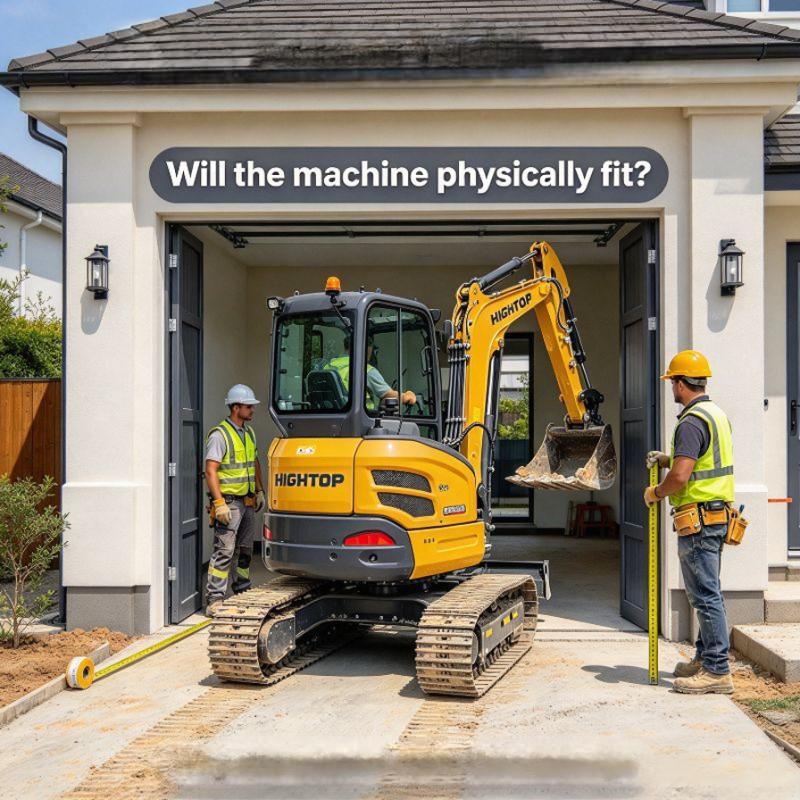
Do not measure only the gate itself. If the machine needs to make a turn immediately after entering, the available turning space matters too.
For example, Hightop's HT10B is listed with a retractable track range of 830–1000 mm. That specification is relevant when access width is a major purchasing consideration.
2. Define the actual digging requirement
Write down the required digging depth rather than simply telling the supplier that the machine will be used for “construction.”
Landscaping, drainage, utility trenching and foundation-related work can require different working ranges.
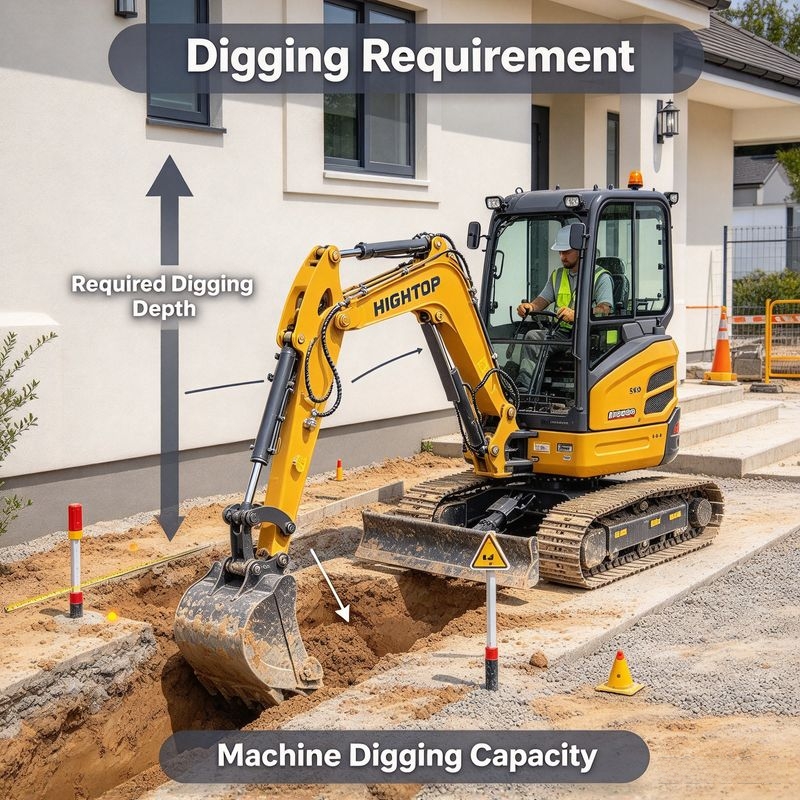
Once the required depth is known, compare it with the working-range specifications of the actual models being quoted.
3. Check how the machine will be transported
A machine that works well on site still has to get there.
Before ordering, confirm the operating weight and transport dimensions of the exact configuration. If the excavator will move between multiple customer sites, transport can become a regular operating cost and logistical issue rather than a one-time consideration.
4. Think about your typical workload
Look at the jobs you actually receive rather than the largest job you might receive someday.
If most work consists of small landscaping projects, property maintenance and compact trenching, a smaller machine may be easier to place on site. If your regular workload includes deeper excavation and more substantial site preparation, compare 2-ton-class machines as well.
Where a 1 Ton Machine Can Be Practical
A 1 ton mini excavator can be useful when access and machine size are major constraints.
The Hightop HT10B, for example, is listed at 1,000 kg operating weight, with a 830–1000 mm retractable track range and a published 1,650 mm maximum digging depth.
Those specifications do not mean every 1 ton machine will work for every compact project. They simply show why individual machine specifications matter more than the tonnage label by itself.
- Check entrance width before ordering.
- Check required digging depth.
- Check the machine's working radius.
- Check transport weight and dimensions.
- Check whether the configuration matches the intended market.
What Changes When You Consider a 2 Ton Machine?
A 2 ton mini excavator is not simply a larger version of the same purchasing decision.
At this size, buyers should look more closely at the machine's overall dimensions, working range, transport requirements and configuration.
Hightop currently lists several 2-ton-class excavator configurations. Their specifications are not identical, so a quotation should always identify the exact model rather than only saying “2 ton excavator.”
This is especially important when comparing machines from different suppliers. Ask for the complete specification sheet for the model being offered.
Do You Need More Machine, or Just More Information?
Sometimes buyers move directly from a 1 ton search to a 2 ton machine because they assume more machine capacity will solve every job-site problem.
It may not.
If the main problem is a narrow entrance, increasing machine size can create a new access problem. If the main problem is insufficient digging depth, however, working-range specifications become more important.
The right comparison therefore depends on what is limiting the current job.
A Simple Buyer Checklist
- Site access: What is the narrowest opening?
- Digging: What depth and working radius are required?
- Transport: What machine weight can your transport setup handle?
- Frequency: How often will the excavator move between sites?
- Work mix: What percentage of your jobs are landscaping, trenching, construction or property maintenance?
- Configuration: Do you need a particular cab, track or attachment configuration?
What to Send a Manufacturer When Requesting a Quote
A useful quotation request does not need to be complicated.
Give the supplier your main application, narrowest access width, required digging depth, expected workload and destination market. If transport is important, include the type of trailer or vehicle you plan to use.
This gives the manufacturer enough information to compare suitable configurations instead of sending a generic 1-ton or 2-ton price.
For Hightop buyers, the HT10B 1-Ton Mini Excavator is one model to review when compact access is important. Buyers can then compare the specifications of the available 2-ton-class machines against the same job requirements.
The goal is not to choose a machine because its tonnage number looks right. The goal is to make sure the machine's dimensions, working range and configuration match the work you will actually put it through.